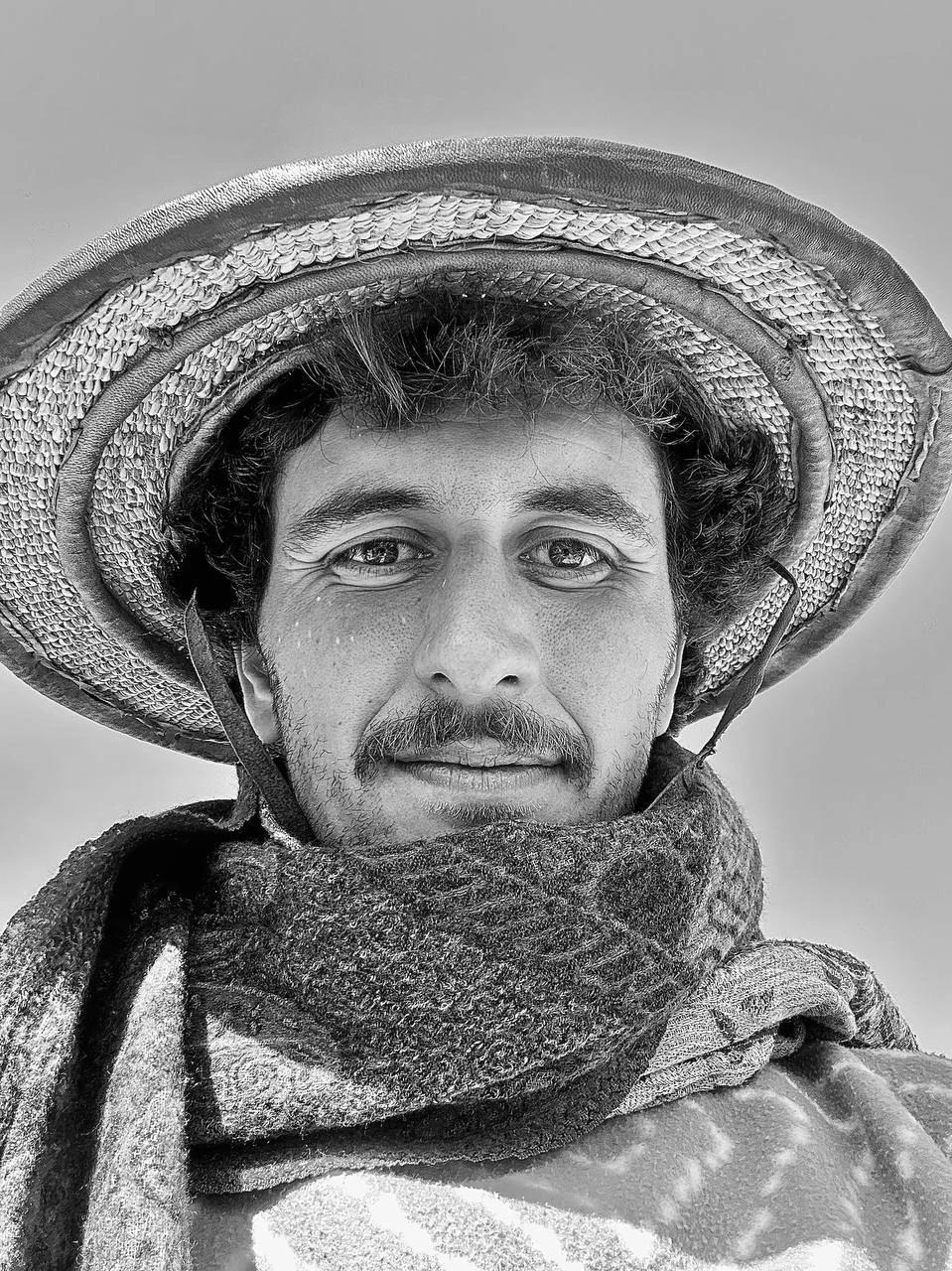
Thomas Lafuente doesn’t take photographs so much as leave them to happen. He builds his cameras from empty beer cans, points them at a horizon, and walks away to let time tell its story.
Based in Oslo, he has buried, taped, lashed and wedged these cans into fjords, deserts, forests and ridgelines across Europe and the Arctic. He thinks of himself less as a photographer than as a patient collaborator with the sky.
Each camera is absurdly simple: a can, a pinhole the width of a needle, and a single sheet of black-and-white photographic paper taped inside. There is no lens, no shutter, no battery — nothing to break and nothing to set. Once it is sealed, the only variable left is time.
From one solstice to the next, the sun rises and falls across the can’s tiny aperture, scorching its own path directly onto the paper. Clear days draw bright, unbroken arcs. Storms and snow leave gaps. After six months Thomas retrieves the can, opens it in shade, and scans the paper before the light can touch it again — recording, in a single frame, a season of weather and the slow tilt of the planet.